The challenges when destroying global HFCs
Effective international projects to control these harmful greenhouse gases hinge on methodologies that strike the…

Effective international projects to control these harmful greenhouse gases hinge on methodologies that strike the right balance between rigor and pragmatism.
Reducing emissions from superpollutant sources is critical for limiting global warming. Models show that it is now likely that global temperatures will exceed 1.5 degrees Celsius above pre-industrial levels within the next decade, and it will be crucial to keep this exceedance minimal. In this effort, mitigating the end-of-life HFCs accumulating around the world in the decades following the Kigali Amendment is an important component. Projects targeting gases like HFCs, which are in an evolving state of regulatory treatment, can be especially complex. When designing new methodologies, the focus should be on establishing protocols that are both high-integrity and practical, to maximize impact.
Tradewater has historically focused on the aggregation and destruction of ozone depleting substances (ODS), specifically old refrigerants like CFCs and more recently HCFCs. The production of HCFCs has been phased out in developed countries under the Montreal Protocol, with phase-out ongoing in developing countries. We have eliminated over 11.3 million metric tons of CO2e through the development of emission reduction projects targeting these and other superpollutants.
Our global teams have experience with sourcing, collecting, consolidating, transporting, and destroying the gases that harm our planet and threaten our climate stability. Our work to find these legacy refrigerant gases around the world has given us unique insights and lessons into how we should collectively work to solve the end-of-life management of HFCs.
HFCs are potent greenhouse gases which have up to 8,690 times the global warming potential (GWP) of CO2. The Montreal Protocol, which called for the phase-down of CFCs and HCFCs, led to an increase in the use of HFCs as a replacement for these legacy refrigerants. In 2016, the Kigali Amendment to the Montreal Protocol was introduced. Under this amendment, HFCs will be phased down across the world, with Article 5 (A5) countries in the developing world phasing down HFC use and production more slowly, over a longer time horizon.
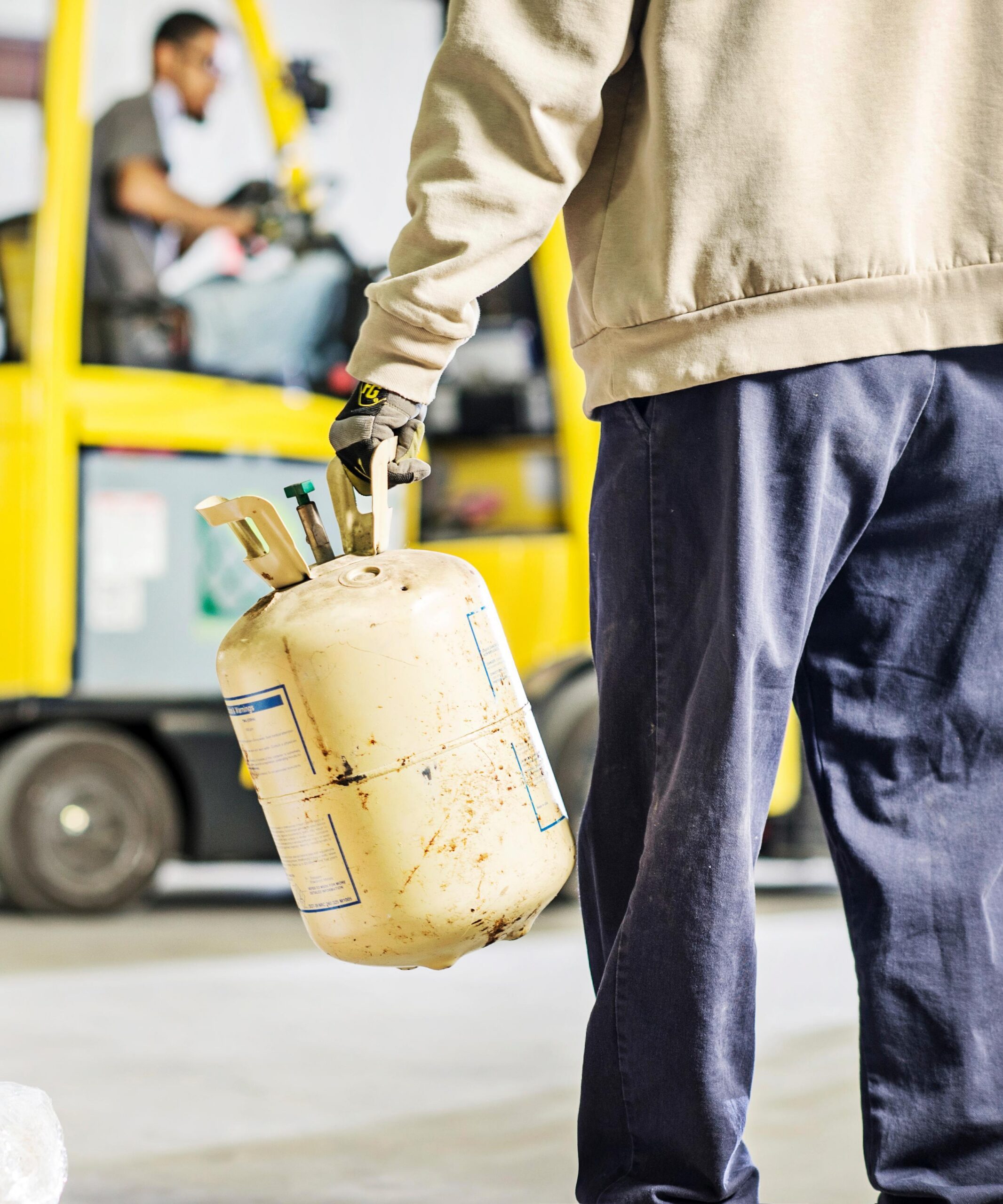
HFCs are used in refrigeration, air conditioning, insulation, and aerosols. The most common, HFC-134a, has a GWP 1,530 times that of CO2. The contents of one 30lb cylinder, if released, is equivalent to the CO2 emissions from consuming nearly 2,000 gallons or 7,570 liters of gasoline.
Today, the proliferation of HFCs represents a significant potential impact on our climate, threatening to undermine climate benefits already achieved. As newer low-GWP solutions are implemented and the phase out of HFCs begins, we need to make sure that we have the right systems in place to effectively manage these gases at their end of life. This includes the development of methodologies that promote meaningful climate action while upholding robustness.
There are few methodologies focused on HFCs currently in review. Our collaboration with the Open Carbon Protocol (OCP) in the HFC sector is one such. Tradewater’s extensive experience with handling ODS puts us in a strong position to apply our detailed learnings to HFCs and other harmful gases. These methodologies require careful review to ensure that while maintaining high quality standards, ensuring additionality, and preventing perverse incentives, they also reflect the realities faced by teams executing the work to provide a solution for end-of-life HFCs around the world. Some areas to pay attention to include:
Ensuring that crediting structures make global destruction projects financially viable and are reflective of when project impacts happen.
Establishing documentation requirements that are practical in relation to the scenarios typically encountered when dealing with HFCs in A5 countries.
Ensuring that testing requirements don’t have the unintended consequences of excluding large amounts of harmful gases from destruction projects.
Maintaining additionality requirements that account for the long lead time to complete large international aggregation and destruction efforts.
Avoiding assigning the obligation to avoid adverse incentives to project developers, to keep projects moving forward in a timely manner.
Some protocols assume a 100% venting baseline scenario, with carbon credits issued for the entire quantity of gases destroyed that will not end up in the atmosphere. Conversely, protocols using a non-100% venting baseline scenario assume gradual leakage year over year, and issue credits based on an assumed percentage of leakage during each year of a crediting period.
While a 100% venting baseline scenario is typically applied to the HFCs recovered from appliances in A5 countries, a non-100% venting baseline scenario may be applied to some confiscated gases in government-controlled stockpiles, which sit dormant in storage, at risk of leaking. This differing treatment can make projects focused on acquiring and destroying stockpiled gases unviable. Our work does not start when a cylinder is destroyed. Rather, it starts years earlier when the project developer begins building the system needed to reach that cylinder. Typically, significant upfront investment is required and so applying a non-100% venting baseline scenario severely damages project economics, leaving the fate of harmful substances around the globe hanging in the balance.
The gases in government-controlled stockpiles are withheld for different reasons and not returnable to the market. Their custodians rarely have the means to dispose of them properly, leaving them sitting and awaiting a solution. If carbon markets cannot viably fund their proper disposal, it is a missed opportunity for the climate. Upfront crediting for HFC projects can make these projects competitive with those for gases with higher GWPs. Additionally, the gas is destroyed at a finite point in time, and that action is permanent. “If credits only come annually after the work is already done, the project may not be financeable even though the climate outcome is immediate and permanent,” said Youssef Souissi, Director of International Halocarbons at Tradewater.
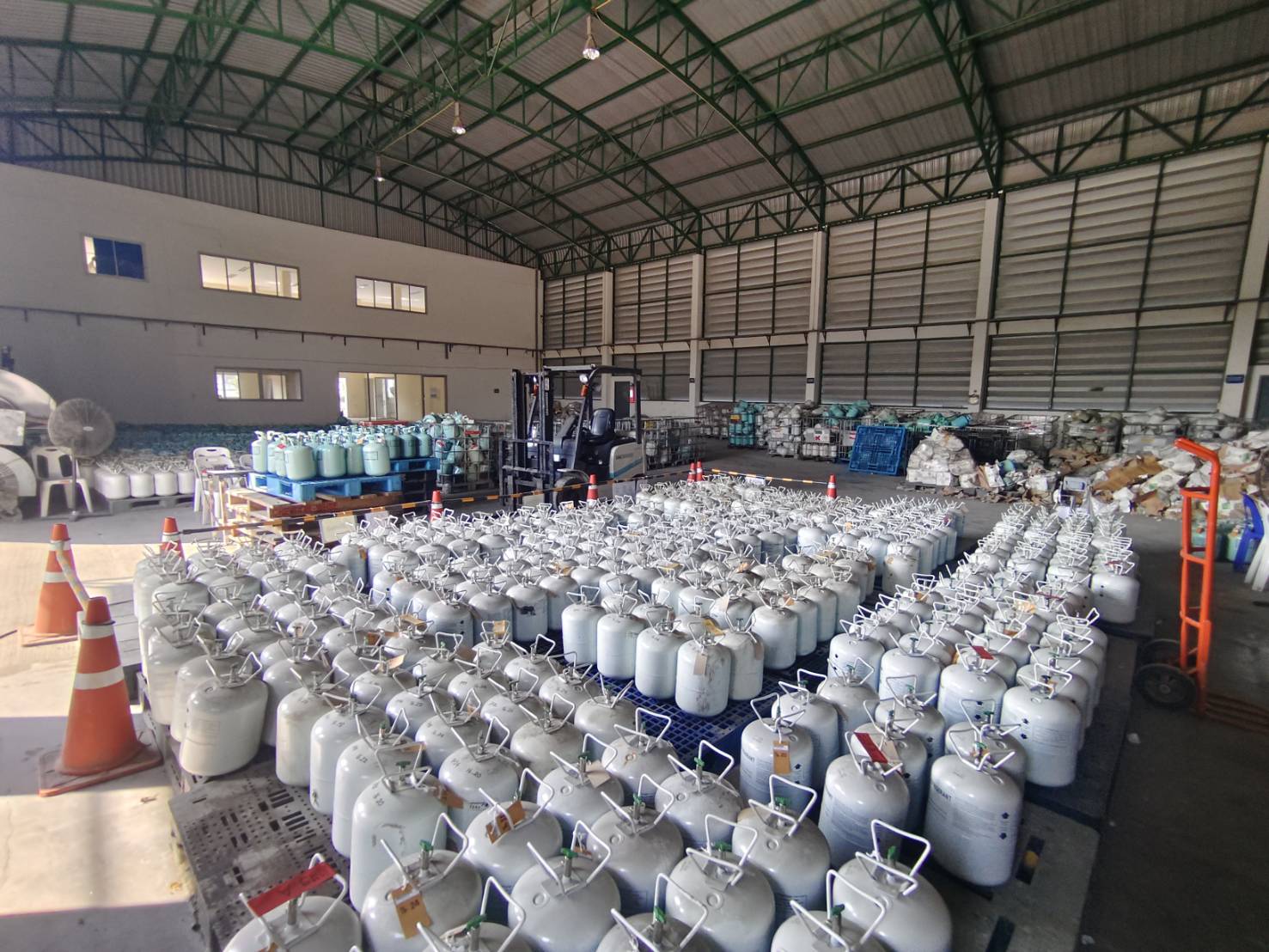
Requiring equipment-level and service-history information is unreasonable in many A5 contexts, especially for recovery that has already occurred before a carbon project developer comes into the picture. These materials are often recovered through fragmented supply chains, with greatly varying enforcement of documentation standards, which sometimes makes it challenging to gather detailed information about the inventory. In many cases, such materials have been moved through multiple handlers or stored in conditions that do not allow for perfect equipment-level documentation or highly standardized tank composition. None of these factors reduce the climate value of destroying these gases, but these conditions do make it more difficult to meet stringent and inflexible accounting criteria.
Point of origin documentation is a particular challenge when working with HFCs in A5 countries. Processes designed to help ensure traceability and transparency of material sources are impractical in much of the developing world and can hamstring teams trying to move the materials to another location for safe destruction. “We propose maintaining the requirement to demonstrate Point of Origin; however, having an attestation to delineate evidence can provide safeguards to preserve project integrity, while allowing scale and implementation,” said Andre Buiza, Senior Carbon Project Manager at Tradewater.
Methodologies requiring that tanks with moisture, or mixed tanks, be removed can prohibit projects that are on track to achieve strong emissions reductions. In our experience, de-watering infrastructure is rarely available in destruction facilities as most hazardous waste facilities don’t require this service on-site. Removing highly restrictive requirements pertaining to moisture will streamline project efforts. “The potential risk of moisture to project integrity is entirely mitigated with the deduction of moisture when applying the quantification methodology,” said Buiza. “Conversely, a representative sample of a mixed tank can be obtained by meeting circulation requirements despite not meeting the mixed tank requirements.”
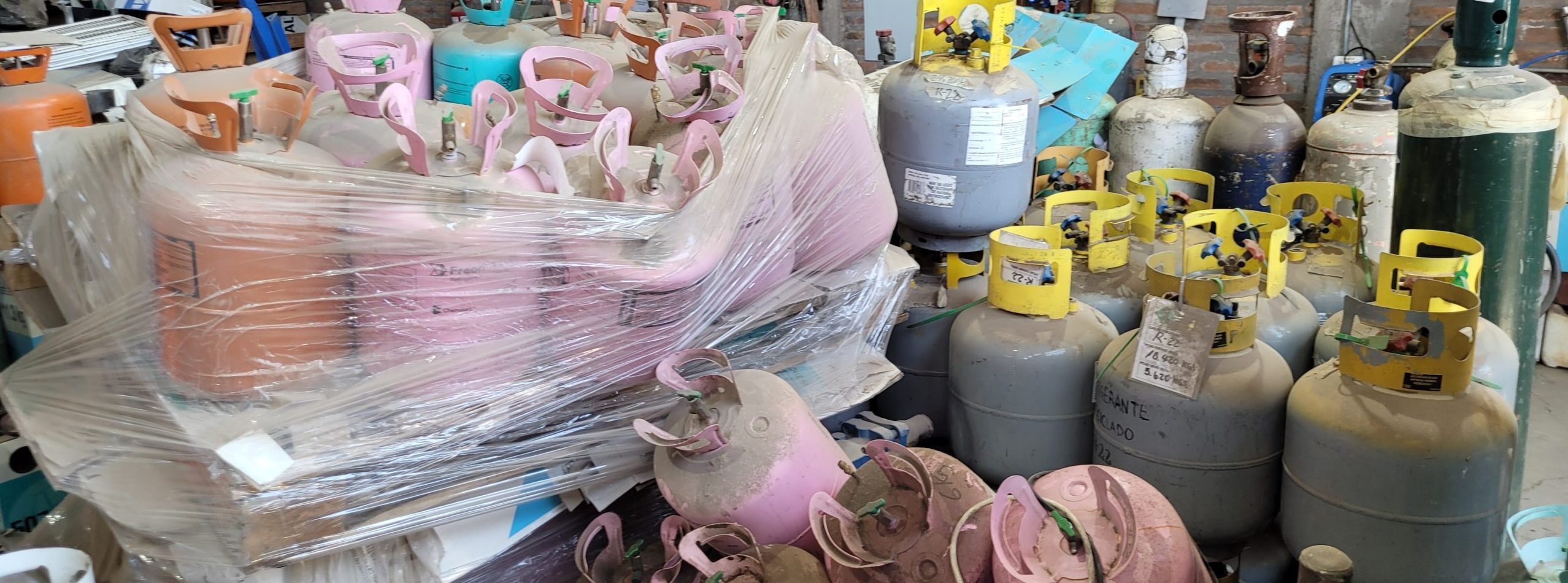
An agile approach to this issue enhances valuable climate action, while rigid requirements can hinder progress. “Tradewater sees cases where a project collects gas from multiple small workshops and sources and later finds that some cylinders contain mixed refrigerants or elevated moisture,” Souissi said. The material still has the potential to cause climate harm and can still be safely destroyed, “but the methodology could make it ineligible because it does not meet the monitoring conditions. The dirtiest and messiest gases are often the ones most worth destroying.”
Additionality is an important concept that needs to be upheld to maintain market and buyer confidence in all methodologies used in carbon markets. And, when working with materials for which the treatment and legal requirements might change over time, it’s not possible to guarantee that no shifts will occur over the timespan of an elongated and complex project. “As countries develop and adopt policies, there is the very real possibility that project development will occur before policies are finalized and put into practice,” said Chris Page, Chief Impact Officer at Tradewater. “For country-level additionality checks, we recommend establishing a grandfathering window in situations where a country-level check fails, to accommodate projects that are already underway.”
This approach will prevent valuable refrigerant destruction projects from becoming excluded from crediting, due to legal and regulatory changes that occur in-country in the months and years after the effort commences. “As a project developer, Tradewater enters a new country and spends years building relationships with service providers, vendors, and regulators before material can move to destruction,” said Souissi. “By the time the supply chain stabilizes, much of the applicable crediting or eligibility window may have passed, even though the project is only just becoming operational.”
Since the production of virgin HFCs remains legal in A5 countries, there is a need to prevent adverse incentives, which might occur if the price of acquiring material destined for destruction is higher than the cost of acquiring virgin material. Tradewater supports awareness and reasonable prevention of adverse incentives. Various safeguards are already in place which fulfill this requirement, including the need to demonstrate the Point of Origin of materials, and the ineligibility of virgin materials under protocols.
Now, some methodologies are calling for project developers to also monitor local market prices for virgin materials. We do not believe that the burden should be on project developers to compare local market prices for virgin material with the compensation provided to technicians for refrigerant recovery. Instead, we recommend that registries utilize existing safeguards in the additionality checks that they complete, to provide a fair and comprehensive assessment without placing the burden on project developers.
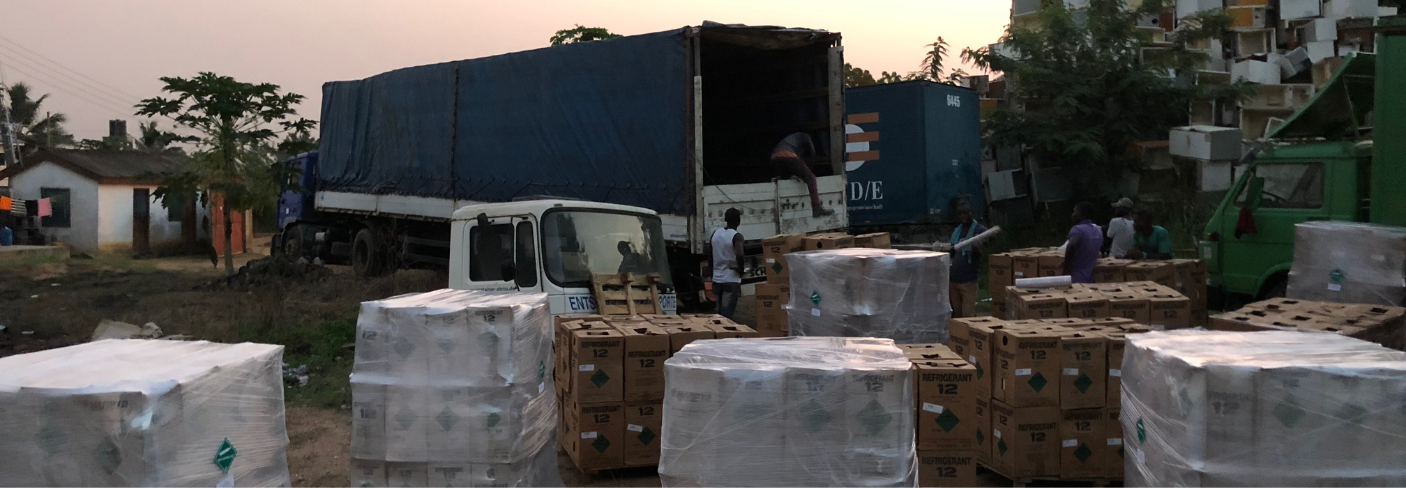
At Tradewater, we have over a decade of experience with managing halocarbon destruction projects. We’ve worked in Africa, Asia, North America, and Central and South America, liaising with governments and other regional stakeholders to bring these important initiatives to completion. In this work, we have accumulated many key learnings that can be applied to effectively addressing HFCs as well. Our position is clear: we strongly support rigorous methodologies, and we welcome scrutiny from our peers in the industry as we continue to develop new methodologies for ambitious global climate action projects.
We also want to emphasize that methodologies can and should reflect the realities that teams encounter in the field, rather than upholding perfect-world scenarios which do not bear resemblance to our current reality in preventing the release of superpollutants. Our top priority now, as always, is to protect our planet from catastrophic climate change, by destroying the most harmful greenhouse gases before it’s too late.
Effective international projects to control these harmful greenhouse gases hinge on methodologies that strike the…
Tradewater’s inaugural orphaned well plugging project, OOG1, consisted of three wells that posed a significant…
If there was one through line that resonated at GreenBiz 2026, it was the dichotomy…
Incoming CEO Kirsten Dueck brings decades of experience in impact investing, social enterprise, and executive…

California’s AB 1305 marks a significant shift in how companies must engage with and report…